
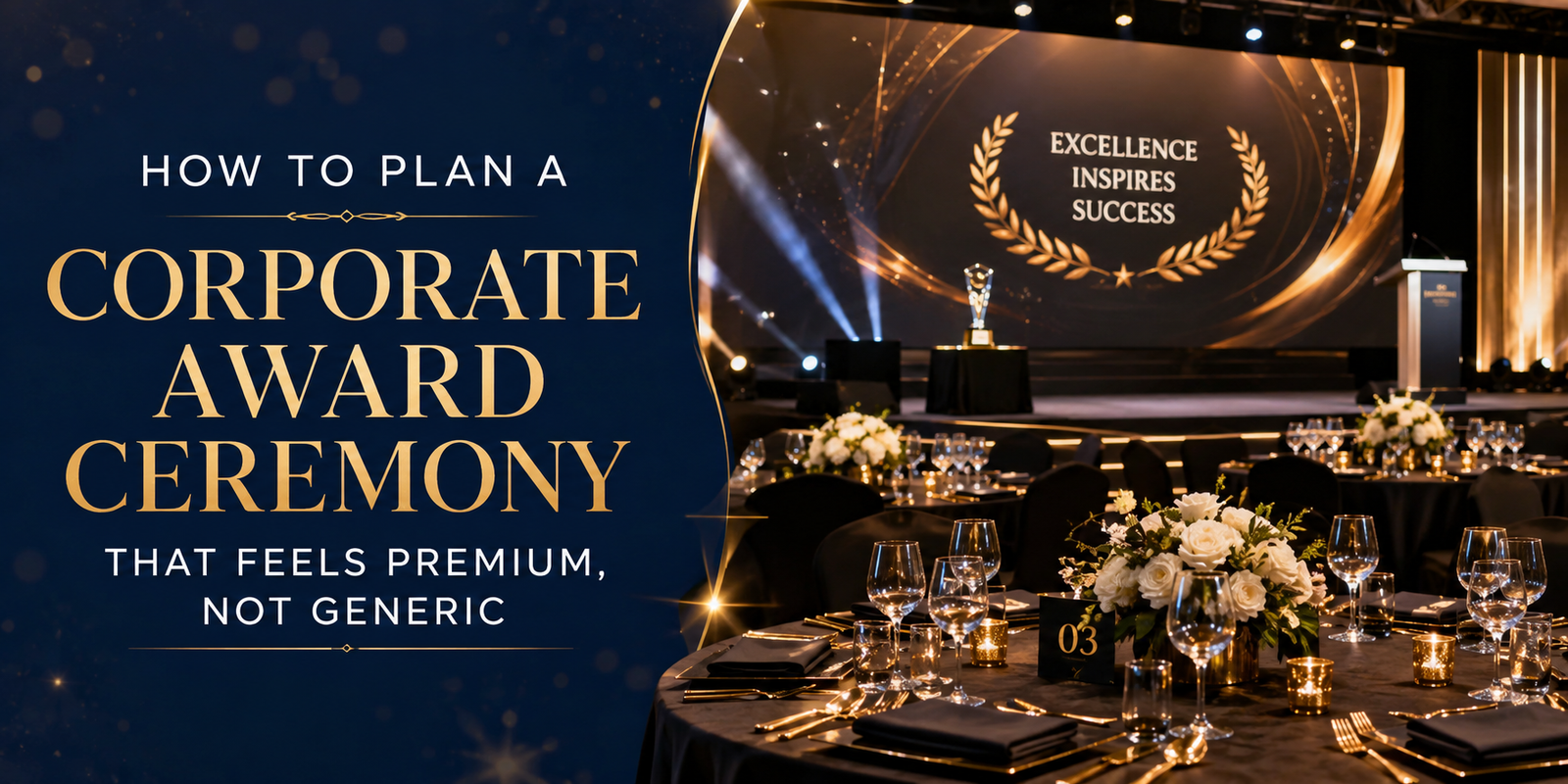
Every company hosts an award ceremony at some point. Sales teams get recognized, top performers get trophies, and everyone claps at the right moments. But if you have sat through enough of these, you know most of them blur together — same round tables, same PowerPoint slides, same forced small talk during dinner.
The difference between a forgettable ceremony and one people talk about for months usually comes down to planning decisions made weeks before the actual night. Here is what goes into building a corporate award ceremony that feels intentional and high-value, not like a checkbox exercise.
Start With the "Why," Not the Venue
A common mistake is jumping straight to booking a banquet hall. Before any logistics, get clarity on what the ceremony is actually celebrating — annual performance, a milestone anniversary, a sales target, or a leadership transition. This single decision shapes everything downstream: the tone, the guest list, the stage design, and even the kind of entertainment that fits.
A ceremony recognizing 25 years in business should feel different from one celebrating a quarterly sales win. Once the purpose is locked, the rest of the planning becomes far easier because every choice can be tested against one question — does this support the story we are telling?
Venue Selection Sets the Tone Before Anyone Speaks
Guests form an impression the moment they walk in, long before the first award is handed out. A cramped conference hall with fluorescent lighting signals "routine internal meeting." A well-lit banquet space with proper stage production signals "this matters."
Some practical points worth checking before finalizing a venue:
- Confirm the stage size can accommodate award presentations, photo moments, and any performance elements without feeling crowded
- Check AV capability — sound clarity matters more at award nights than almost any other event type, since names and speeches need to be heard clearly
- Look at seating layout options; round tables work for networking-heavy events, while theatre seating suits ceremonies with a longer award list
- Ask about backup power and technical support on-site, since a mic failure mid-ceremony is hard to recover from gracefully
Venues like five-star hotels and dedicated convention spaces in cities such as Mumbai tend to offer this kind of infrastructure by default, which is part of why so many established award nights happen there.
Corporate Event Entertainment Is Not an Afterthought
This is where a lot of ceremonies lose the room. Awards get announced, a few speeches happen, dinner is served — and then there's a long, awkward stretch with nothing planned. Corporate event entertainment exists to fill exactly that gap, and done well, it becomes the part guests remember most.
The entertainment does not need to overshadow the awards; it needs to complement the evening's energy. A few formats that consistently work at corporate award ceremonies:
- Live acoustic or band performances during dinner service, keeping energy up without competing with conversation
- A short comedy or anchor-led segment between award categories to keep pacing lively
- A curated musical night segment after the formal awards wrap up, letting the evening transition from formal to celebratory
- Thematic performances tied to the company's milestone or industry, which feel more personal than generic filler acts
The key is sequencing. Entertainment placed at the wrong point in the evening — say, right before a major award announcement — can flatten the moment instead of building toward it. Good event planners map out a full run-of-show so entertainment and recognition segments support each other rather than compete.
Recognition Should Feel Personal, Not Procedural
Reading out a name and handing over a trophy takes thirty seconds. Making that moment memorable takes planning. Consider:
- Short video montages or highlight reels for major award categories instead of just verbal announcements
- Personalized citations that mention a specific project or contribution, not generic praise
- Proper photo moments on stage with good lighting, since these photos often end up on LinkedIn and internal newsletters afterward
- A structured award sequence that builds toward the top honors, rather than a flat list read in random order
Small details like these are what separate a ceremony that feels premium from one that feels like a formality.
Production Value Matters More Than Budget Size
A common assumption is that a premium-feeling event requires a massive budget. In reality, production value — stage design, lighting, sound quality, and pacing — often matters more than sheer spend. A well-lit stage with clean sound and a tightly managed run-of-show will outperform a bigger, poorly paced event every time.
This is also where experience matters. Companies that have handled a high volume of corporate events and award ceremonies tend to anticipate problems before they happen — a delayed speaker, a technical glitch, a guest list change at the last minute — and adjust without the audience noticing.
Logistics That Are Easy to Overlook
A few operational details that quietly determine how smooth the night feels:
- Guest check-in and seating flow, especially for events with VIPs or senior leadership attending
- Dress code communication in advance, so the room feels visually cohesive
- Timing buffers between segments, since award ceremonies almost always run over if not actively managed
- A clear point of contact on the ground for vendors, so issues get resolved without disrupting the flow
None of these are glamorous, but they are usually what people notice only when they go wrong.
Bringing It Together
A corporate award ceremony that feels premium is not about spending more — it is about planning with intent. The venue sets the tone, the corporate event entertainment fills the gaps that would otherwise feel flat, and the recognition moments are designed to feel personal rather than procedural. When these pieces are planned together instead of separately, the evening reads as deliberate rather than default.
For companies planning their next corporate award ceremony, working with an experienced event management team can make the difference between an evening that follows a template and one that genuinely reflects the brand and the people being celebrated.
FAQs
1. How far in advance should a corporate award ceremony be planned?
Most well-executed award ceremonies are planned 6 to 10 weeks in advance, especially if venue booking, entertainment coordination, and award category finalization are involved. Larger ceremonies with 300+ guests often need even more lead time.
2. What type of corporate event entertainment works best for award nights?
Live acoustic performances during dinner and a short anchor-led segment between award categories tend to work well without overpowering the recognition moments. The right choice depends on company culture and the formality of the evening.
3. How many awards should be included in one ceremony?
Somewhere between 8 and 15 award categories usually keeps a ceremony engaging without dragging. Beyond that, pacing tends to suffer unless the run-of-show is carefully managed.
4. What is the ideal duration for a corporate award ceremony?
Most ceremonies run smoothly within 2.5 to 3 hours, including dinner, awards, and entertainment segments. Anything longer risks losing guest attention in the later half.
5. Should award ceremonies be combined with other corporate events?
It depends on the goal. Some companies combine award nights with annual conferences or year-end celebrations to maximize attendance, while others keep them standalone to give recognition its own spotlight. Both approaches work when planned with a clear purpose.
