
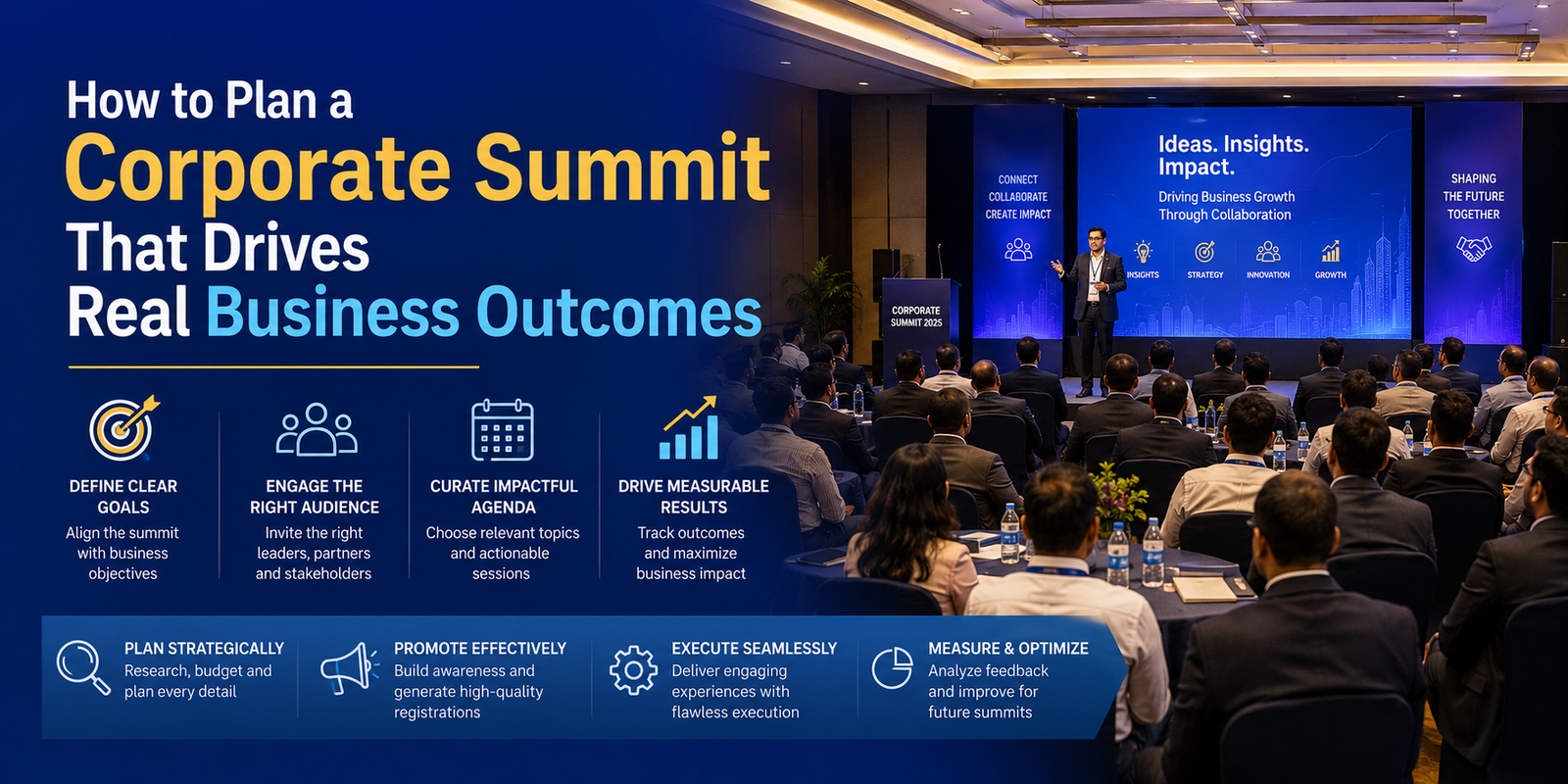
A corporate summit only pays off when it is built around a clear business goal, not just a guest list and a good venue. This guide walks you through the practical steps of corporate summit planning — from setting objectives and budgets to choosing a venue, managing logistics, and measuring results afterward. Whether you are organizing a 100-person leadership meet or a 1,000-delegate conference, these steps will help you plan a summit that actually moves the needle for your business, not just one that looks good in photos.
What Corporate Summit Planning Actually Involves
Corporate summit planning is the process of designing and executing a multi-day or single-day business event with a specific outcome in mind — closing a sales year, launching a strategy, training leadership, or bringing partners and clients together. It differs from a routine meeting because it involves several moving parts working together: venue booking, delegate travel, speaker sessions, food and beverage, stage production, and post-event reporting.
Companies in Mumbai, Delhi, Bangalore, and other business hubs across India host these events for annual conferences, dealer meets, investor summits, and internal town halls. The scale can range from an 80-person leadership offsite to a 1,000-plus delegate industry conference, but the planning discipline behind both is the same — start with the objective, then work backward into logistics.
Step-by-Step Process for Planning a Corporate Summi
1. Define the Objective Before Anything Else
Before booking a single vendor, write down what the summit needs to achieve. Is it meant to align regional teams around a new target, introduce a product to distributors, or reward top performers? The objective shapes every later decision, from venue choice to agenda structure. Skipping this step is the most common reason summits end up feeling like a formality rather than a business driver.
2. Set a Realistic Budget Early
Budgets for corporate summit planning in India generally break down across a few core heads:
- Venue and accommodation, usually the largest share for multi-day events
- Food and beverage across all sessions
- Audio-visual production, stage design, and lighting
- Travel and delegate transportation
- Entertainment, gifting, and delegate experience elements
- A contingency buffer of at least 8 to 10 percent for last-minute changes
Getting quotes from an experienced corporate event services provider early helps you understand where costs typically land for your delegate count, so there are no surprises closer to the date.
3. Choose a Venue That Matches Your Delegate Count and Purpose
A 150-person leadership summit works well in a five-star hotel conference hall with integrated catering, while a 600-plus delegate conference usually needs a convention centre with modular breakout rooms and stronger power and WiFi infrastructure. Mumbai offers a wide spread of options, from five-star ballrooms to large-format venues like Jio World Convention Centre, giving planners flexibility depending on scale and budget.
Points to check during a venue walkthrough:
- Seating capacity against your actual headcount, with a buffer for walk-ins
- Breakout room availability if the agenda includes parallel sessions
- Power backup and WiFi bandwidth for live streaming or hybrid attendance
- Parking and accessibility for VIP and outstation delegates
- In-house catering quality versus outside vendor flexibility
4. Build an Agenda That Respects Delegate Time
A packed agenda without breathing room usually backfires. Space out keynote sessions, panels, and breakout workshops with proper networking breaks. For summits longer than a day, build in time for informal interaction — dinners, team activities, or evening receptions — since many business relationships form outside the formal sessions.
5. Handle Logistics With a Dedicated Team
Registration, badge printing, airport transfers, accommodation blocks, and on-ground coordination all need a point person tracking them closely, usually starting 8 to 12 weeks before the event date for a mid-size summit and 4 to 6 months out for larger, multi-day conferences. Larger summits often involve 20 to 30 vendors working on the same day, so a single coordination team — in-house or an outsourced corporate event services partner — prevents last-minute confusion.
6. Invest in Production and Delegate Experience
Stage design, sound, lighting, and screen management shape how professional the event feels to attendees. So does the smaller stuff: welcome kits, signage, dietary accommodations, and a smooth check-in process. These details rarely show up in a budget summary, but they are what delegates remember afterward.
7. Measure the Outcome, Not Just the Turnout
Once the summit wraps up, collect feedback through short delegate surveys, track attendance against registrations, and compare the results against the objective you defined in step one. If the goal was product adoption or partner alignment, follow up with structured communication in the weeks after the event to keep the momentum going.
Why Companies Work With Corporate Event Services Providers
Handling venue negotiations, vendor coordination, and on-ground execution internally is possible for smaller events, but it pulls internal teams away from their actual jobs once the delegate count crosses a few hundred. Professional corporate event services providers bring existing vendor relationships, negotiated venue rates, and production teams who have handled similar-scale conferences before. Snowbubble Events, a Mumbai-based event management company with over 13 years of experience across corporate, government, and institutional gatherings, has managed business summits ranging from 80-person leadership meets to 1,000-plus delegate conclaves at venues including Jio World Convention Centre, ITC Maratha, and The St. Regis Mumbai.
Common Mistakes Companies Make While Planning a Summit
- Booking a venue before finalizing delegate count and agenda
- Underestimating catering numbers, leading to shortages or waste
- Skipping a technical rehearsal for AV and streaming setups
- Assigning event coordination to a team with no bandwidth or prior experience
- Not building in a contingency budget for weather or last-minute additions
Final Thoughts
A well-run corporate summit is a business investment, and it deserves the same planning discipline as any other major initiative. Start with a clear objective, budget realistically, choose a venue that fits your scale, and bring in experienced corporate event services support where internal bandwidth runs thin. Done right, a summit does more than fill a calendar — it moves relationships, decisions, and revenue forward. If you are planning a corporate summit in Mumbai or elsewhere in India, Snowbubble Events can help you plan and execute the event from the ground up.
Frequently Asked Questions
1. How far in advance should I start planning a corporate summit?
For 300 or more delegates, start 4 to 6 months ahead to lock in venue dates and speakers. For summits under 200 delegates, 8 to 12 weeks is usually enough.
2. What is the average cost of corporate summit planning in India?
Costs vary by city, venue tier, and delegate count, ranging from a few lakhs for a single-day event under 150 attendees to significantly higher for multi-day, large-format conferences with full production and hospitality.
3. What should I look for while shortlisting a corporate event services provider?
Check their past work at a similar scale, ask for client references, confirm their vendor network in your city, and review how they handle contingency planning and on-ground coordination.
4. Can a corporate summit be planned on a tight timeline?
Yes, though venue and vendor options shrink. A shorter timeline works best with a smaller delegate count and a coordination partner with established vendor relationships in the city.
5. How do I measure whether a corporate summit was successful?
Compare outcomes against the objective set at the start — attendance versus registration, feedback scores, and any measurable result such as deal closures, product adoption, or team alignment after the event.
